
telecaster string guide
Struggling with Telecaster restringing? Our ultimate string guide simplifies the process! Learn pro tips, avoid common mistakes & keep your Tele sounding sweet. ✨
Telecaster String Guide: An In-Depth Overview
Telecaster string spacing profoundly impacts playability, with vintage models featuring 2 1/4″ and modern guitars utilizing 2 1/8″. Choosing the right spacing enhances comfort and technique.
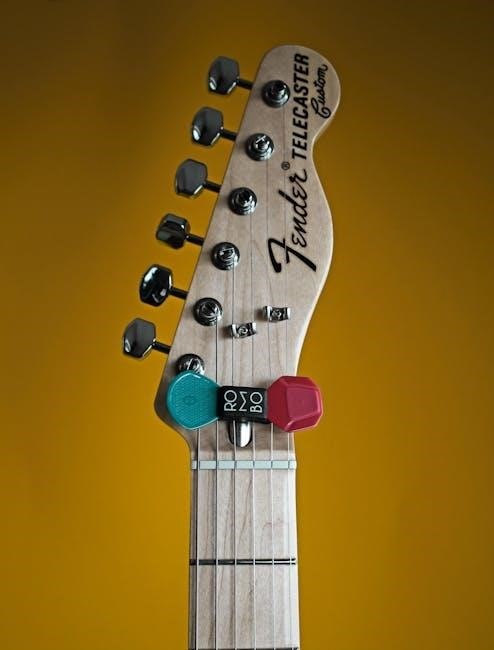
Telecaster string spacing, often measured as the distance between the center of the low E and high E strings, is a crucial element influencing playability and feel. Understanding this dimension is vital for both players and builders. Historically, Telecasters have exhibited variations in string spacing, primarily categorized as vintage and modern. This difference stems from evolving manufacturing practices and player preferences over the decades.
The spacing isn’t merely a cosmetic detail; it directly affects fingerstyle techniques, lead playing comfort, and even string breakage susceptibility. Vintage Telecasters typically feature a wider spacing of 2 1/4 inches, while modern iterations often adopt a narrower 2 1/8 inch spacing. This guide delves into the nuances of these differences, providing insights into measuring, adjusting, and optimizing string spacing for your Telecaster, ensuring a personalized playing experience.
Understanding Vintage vs. Modern String Spacing

The core distinction between vintage and modern Telecaster string spacing lies in the E-to-E string distance at the bridge. Vintage Telecasters, generally pre-1970s, showcase a wider 2 1/4″ (57.15mm) spacing, favored by players desiring more room for fingerpicking and hybrid techniques. This wider layout offers a more spacious feel, potentially enhancing complex chord voicings and intricate fingerstyle patterns.
Conversely, modern Telecasters commonly employ a narrower 2 1/8″ (54mm) spacing. This tighter arrangement often appeals to lead players, facilitating faster runs and easier bending. The reduced distance between strings can streamline technique, though some may find it less comfortable for broader fingerstyle approaches. Warmoth necks, a popular aftermarket choice, typically utilize the modern 2 1/8″ spacing for through-body string holes. Ultimately, the preferred spacing is subjective, dictated by individual playing style and comfort.
Vintage Telecaster String Spacing (2 1/4″)
A 2 1/4″ (57.15mm) string spacing, characteristic of vintage Telecasters, provides a wider platform for players. This generous spacing is particularly beneficial for fingerstyle guitarists, offering ample room for independent finger movements and complex picking patterns. The increased distance between strings minimizes accidental muting and allows for greater clarity in chord voicings.
Historically, this wider layout was standard on early Telecaster models. While some modern players may find it initially unfamiliar, many appreciate the enhanced control and comfort it provides, especially when employing hybrid picking techniques. It’s often favored when recreating the feel of classic Telecaster instruments. However, adapting a modern hand to this spacing may require some adjustment. String Saver saddles can be used with this spacing, offering tone enhancement and reduced breakage.
Modern Telecaster String Spacing (2 1/8″)
Modern Telecasters commonly feature a narrower string spacing of 2 1/8″ (54mm). This tighter spacing caters to players prioritizing speed and ease of bending, particularly those focused on lead guitar work. The reduced distance between strings facilitates quicker transitions and allows for more efficient use of legato techniques.
Warmoth necks often utilize this 2 1/8″ spacing for their through-body holes, mirroring Fender’s contemporary specifications. Some players find this spacing more comfortable for fast runs and intricate solos. However, it can feel cramped for those accustomed to wider layouts. It’s important to note that some 2-point bridges are compatible, though drilling may be required. Choosing the right spacing is a matter of personal preference and playing style, impacting overall comfort and performance.
The Impact of String Spacing on Playability
Telecaster string spacing significantly influences how a guitar feels and plays. Wider spacing, like that found on vintage models, generally benefits fingerstyle players, providing more room for independent fingerpicking and complex chord voicings. It reduces accidental muting of adjacent strings during intricate passages.

Conversely, narrower spacing, common in modern guitars, often suits lead players. The closer string proximity allows for faster, more fluid bending and easier execution of legato techniques. Adjusting saddle positions can subtly refine spacing, but major changes might necessitate bridge or nut modifications. Ultimately, the ideal spacing depends on individual hand size, playing style, and preferred techniques, impacting comfort and performance.
Fingerstyle Playing and Wider Spacing

For Telecaster players specializing in fingerstyle guitar, wider string spacing—typically 2 1/4″—offers distinct advantages. This increased distance between strings minimizes the risk of accidentally muting adjacent strings during complex fingerpicking patterns. It provides greater clarity and definition in arpeggios and intricate chord voicings.
The extra space allows for more precise finger placement and independent control of each string, crucial for achieving a clean and articulate sound. Wider spacing also accommodates larger fingers, enhancing comfort during extended playing sessions. Players prioritizing nuanced dynamics and harmonic richness often gravitate towards the wider spacing found in vintage-style Telecasters, maximizing their fingerstyle potential.
Lead Playing and Narrower Spacing
When it comes to fast lead work and bending on a Telecaster, many guitarists prefer the tighter string spacing of modern instruments – around 2 1/8″. This narrower configuration reduces the distance fingers need to travel between strings, facilitating quicker and smoother transitions during rapid licks and solos.

The reduced spacing can also enhance bending control, as the strings are closer together, providing a more secure grip. This is particularly beneficial for techniques like vibrato and string skipping. Players focused on speed and precision often find that the narrower spacing allows for greater agility and responsiveness. Ultimately, the choice depends on individual preference, but for shredders and lead specialists, a tighter spacing can be a significant advantage.
Measuring String Spacing on Your Telecaster
Accurately measuring string spacing on your Telecaster is crucial before making any modifications or ordering replacement parts. The measurement represents the distance between the centers of the low E and high E strings. You’ll need a precise ruler, ideally one with millimeter markings, for the most accurate results.
Begin by measuring at both the nut and the bridge. At the nut, measure from the center of the low E string slot to the center of the high E string slot. Repeat this process at the bridge, measuring between the centers of the corresponding saddles. Note that slight variations can occur due to manufacturing tolerances. Comparing these measurements will confirm whether your guitar adheres to vintage (2 1/4″) or modern (2 1/8″) spacing standards.
Tools for Accurate String Spacing Measurement
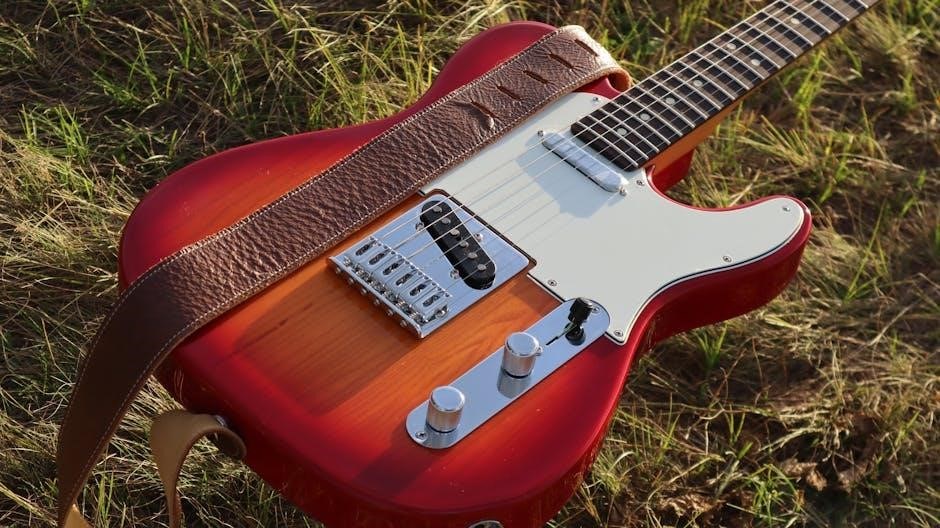
Several tools can aid in achieving precise Telecaster string spacing measurements. A high-quality digital caliper provides the most accurate readings, displaying measurements in both inches and millimeters. A precise ruler, preferably with 1/64-inch or 1mm graduations, is a more affordable option, though requiring careful alignment.
Specialized string spacing rulers are also available, designed specifically for guitars. These tools often feature pre-cut notches to quickly determine if your guitar conforms to vintage or modern spacing. Furthermore, layout tools exist that help create new nut slots with specific string spacing, utilizing measurements like 1.6250″, 0.1250″, and 0.2454″ for accurate slot placement; Regardless of the tool chosen, ensuring proper lighting and a stable surface are vital for reliable results.
String Spacing at the Nut
Precise string spacing at the nut is crucial for comfortable playing and accurate intonation on a Telecaster. Typically, the string-to-string slot distance at the nut measures 35mm. However, this can vary slightly depending on whether the guitar adheres to vintage or modern specifications.
A properly slotted nut ensures each string has adequate space, preventing buzzing and facilitating clean fretting. When creating a new nut or modifying an existing one, utilizing a layout tool with accurate spacing measurements (like 1.6250″, 0.1250″, and 0.2454″ increments) is highly recommended. The overall string spacing at the base of the neck, where the nut sits, often measures around 55mm, influencing the feel and playability significantly. Consistent spacing contributes to a more enjoyable playing experience.
String Spacing at the Bridge
The Telecaster bridge dictates the string spacing at the body end of the instrument, significantly impacting playability. Modern bridges generally feature a 2 1/16″ (52.4mm) string spacing, while vintage-style bridges typically offer a wider 2 1/8″ spacing. Understanding this difference is vital when selecting or modifying bridge components.
Adjusting the individual saddles is the first step to optimize string spacing. Ensuring each saddle sits flat allows for fine-tuning. If space permits, slightly shifting the A string can further refine the spacing to suit individual preferences. Bridges designed for Strat-style guitars with 6-point bridges often fit 2-point Telecaster bridges with minimal drilling. Careful consideration of these measurements ensures optimal comfort and performance.
Adjusting String Spacing: Bridge Saddle Adjustment
Telecaster bridge saddle adjustment is the primary method for refining string spacing. Begin by ensuring each saddle is seated flat against the bridge plate; this establishes a baseline for accurate adjustments. If the existing spacing feels cramped or too wide, subtle saddle movements can make a significant difference.
For minor adjustments, focus on the A string saddle. Gently shifting it slightly can subtly alter the overall spacing without requiring extensive modifications. However, if substantial changes are needed, consider the limitations of the existing bridge plate. More drastic adjustments might necessitate modifications to the plate itself or exploring alternative bridge options. Remember to re-evaluate intonation after any saddle adjustments to maintain accurate pitch across the fretboard.
Modifying the Bridge Plate for String Spacing
Telecaster bridge plate modification is a more involved process, reserved for those seeking significant string spacing alterations. This typically involves creating a new bridge plate with repositioned holes to accommodate the desired spacing. A crucial step is carefully milling the existing saddles, removing a small amount – around 0.0025 inches – from each side. This ensures proper fit and function within the modified plate.
Precision is paramount during this process; inaccurate drilling or milling can compromise the bridge’s stability and intonation. It’s often recommended to entrust this task to a skilled luthier, especially if you lack experience with metalworking. Alternatively, exploring pre-made bridge plates designed for specific string spacings can simplify the process and ensure a professional result. Always prioritize accuracy and stability when modifying the bridge plate.
String Saver Saddles and String Spacing
String Saver saddles present a unique approach to Telecaster string spacing and performance. These saddles, often constructed from a combination of materials, aim to enhance tone while dramatically reducing string breakage – a common issue for aggressive players. String Saver Originals, available for both Strat and Tele guitars, come in a 2-1/16″ spacing, offering a narrower option.
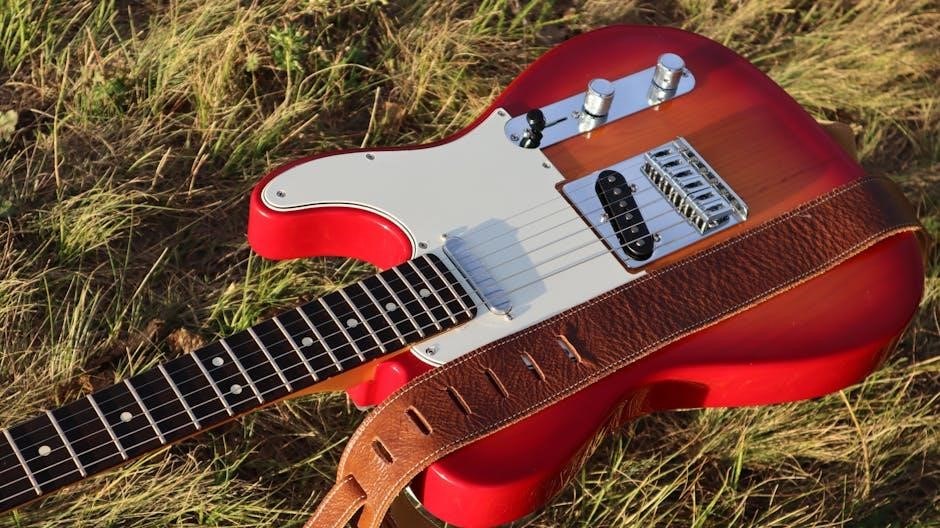
It’s important to note that utilizing String Saver saddles might necessitate slight adjustments to your existing bridge plate or nut, depending on your current string spacing. While they can fit 2-point bridge guitars, some drilling may be required. Consider the overall impact on intonation and playability when switching to these saddles, ensuring a seamless transition and optimal performance. They offer a compelling solution for tone and reliability.
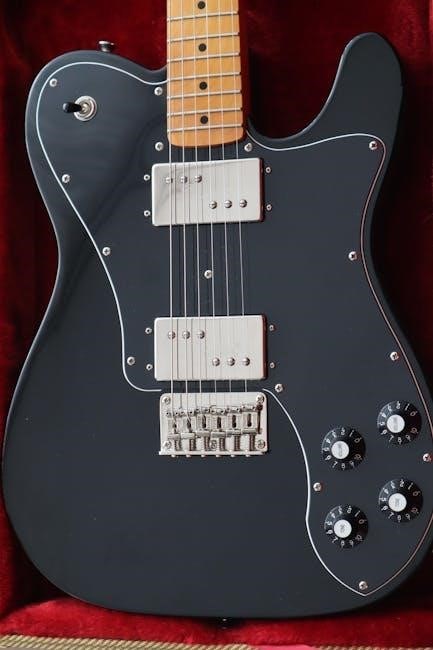
Warmoth Necks and String Spacing Considerations
Warmoth necks are highly regarded for their quality and customization options, but careful consideration of string spacing is crucial when integrating them into a Telecaster build. Warmoth commonly uses 2 1/8″ (54mm) string spacing for their through-body neck holes, mirroring Fender’s modern specifications. However, this can present challenges if you’re aiming for a vintage 2 1/4″ spacing.
The heel design on some Warmoth necks may be better suited to the narrower 2-1/16″ Tele bridge spacing. Attempting to fit a wider 2-1/8″ spacing can potentially cause the high E string to slip off the fretboard edge. Therefore, meticulous planning and potentially modifying the bridge or neck pocket might be necessary to achieve the desired string spacing and ensure optimal playability and intonation with a Warmoth neck.
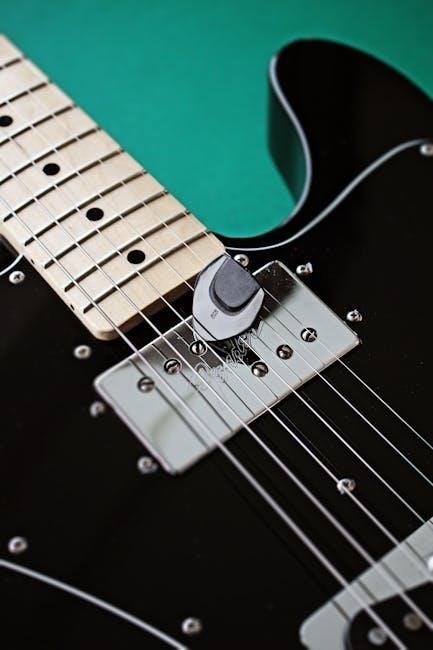
Telecaster Bridge Types and String Spacing Compatibility
Telecaster bridges significantly influence string spacing, with two primary types: 6-point and 2-point. 6-point bridges, traditionally found on vintage models, generally accommodate a wider 2 1/4″ string spacing. These bridges offer a stable platform but may require adjustments for wider string bends.
Conversely, 2-point bridges, common on modern Telecasters, typically feature a 2 1/8″ string spacing. Some 2-point bridges can even fit with 2-1/16″ spacing, offering a narrower feel. Importantly, 2-point bridges are often compatible with Strat-style bodies with minimal drilling. When selecting a bridge, ensure its string spacing aligns with your neck’s specifications and playing style; Mismatched spacing can lead to compromised playability and intonation issues, necessitating careful consideration during component selection.
6-Point Bridge String Spacing
6-point bridges, a hallmark of classic Telecasters, traditionally utilize a 2 1/4″ (57.15mm) string spacing. This wider spacing caters to players who prefer more room between strings, often favored by fingerstyle guitarists. The six mounting screws provide enhanced stability and a direct connection to the body, contributing to a resonant tone.
However, achieving optimal intonation with a 6-point bridge and wider spacing can sometimes require meticulous saddle adjustment. If transitioning from a narrower spacing, the outer strings might feel excessively wide, potentially impacting chord voicings. Furthermore, some players find that the wider spacing can make bending strings slightly more challenging. When using a 6-point bridge, ensure the bridge plate is correctly routed to accommodate the 2 1/4″ spacing for proper string alignment and optimal performance.
2-Point Bridge String Spacing
2-point bridges, increasingly popular in modern Telecaster builds, generally feature a narrower string spacing of 2 1/8″ (54mm) or even 2 1/16″ (52.4mm). This tighter spacing is often preferred by lead players who prioritize speed and ease of bending. The simplified mounting system – with only two screws – allows for greater string tension and a potentially brighter tone.
Warmoth necks, frequently used in custom builds, often align well with the 2-1/16″ spacing, avoiding potential issues with the high E string slipping off the fretboard. While offering enhanced playability for some, the narrower spacing can feel cramped for fingerstyle players. Adapting a 2-point bridge to a guitar originally routed for a 6-point may require drilling new holes in the body, demanding precision to ensure proper alignment and intonation. String Saver saddles are often used with these bridges.
Calculating String Slot Spacing for the Nut
Calculating precise string slot spacing at the nut is crucial for accurate intonation and comfortable playing. A layout tool simplifies this process, providing measurements for slots spaced at 1.6250″, 0.1250″, and 0.2454″ intervals – these are common starting points, but adjustments may be needed based on the specific string gauges used.
At the nut, the string-to-string slot distance typically measures 35mm, expanding to 55mm at the base of the neck. When crafting a new nut, consider the overall string spacing (2 1/8″ or 2 1/4″) and the desired string spread. Precise measurements are vital; even slight errors can affect tuning stability and playability. Remember to account for string gauge – heavier strings require wider slots. Careful planning and execution ensure optimal performance.
Resources for Telecaster String Spacing Information
Numerous online resources cater to Telecaster enthusiasts seeking detailed string spacing information. Forums dedicated to guitar building and modification, like those found on sites specializing in Warmoth parts, offer valuable insights from experienced builders. These communities frequently discuss the nuances of vintage versus modern spacing and provide practical advice on adjustments.
Websites offering guitar parts, such as those selling String Saver saddles, often include specifications and compatibility guides related to string spacing. Additionally, instructional videos on platforms like YouTube demonstrate measuring techniques and bridge adjustments. Exploring these resources empowers players to confidently assess and modify their Telecaster’s string spacing for optimal playability and tonal characteristics. Remember to cross-reference information and consider your individual preferences.