
arctic king portable air conditioner manual pdf
Lost your Arctic King portable AC manual? Find easy-to-download PDF manuals for all models right here! Get troubleshooting tips & keep your cool.
Arctic King Portable Air Conditioner Manual PDF: A Comprehensive Guide
Embark on seamless cooling! This detailed guide unlocks your Arctic King’s potential, offering crucial safety insights and feature explanations for optimal performance today.
Arctic King portable air conditioners offer a convenient cooling solution for various spaces, providing relief without the complexities of permanent installations. These units are designed for ease of use and portability, making them ideal for bedrooms, offices, or any room requiring supplemental climate control. Understanding your Arctic King AC’s capabilities begins with familiarizing yourself with its specific features and operational guidelines.
This comprehensive guide, centered around the Arctic King portable AC manual PDF, will navigate you through setup, operation, maintenance, and troubleshooting. Accessing the manual is paramount for maximizing your unit’s efficiency and ensuring safe operation. The PDF format provides readily available, searchable information at your fingertips, empowering you to resolve issues and optimize performance independently.
Why Use a Manual? Importance of the PDF Version
A user manual is essential for unlocking the full potential of your Arctic King portable AC. It details crucial safety precautions, operational instructions, and maintenance schedules, preventing potential damage and ensuring longevity. Ignoring the manual can lead to inefficient performance, costly repairs, or even voided warranties.
The PDF version offers unparalleled convenience. It’s instantly accessible on any device – smartphones, tablets, or computers – eliminating the need for a physical copy. Searchable functionality allows quick location of specific information, saving valuable time. Furthermore, PDFs are easily stored, backed up, and shared, ensuring you always have access to vital information regarding your Arctic King portable air conditioner.

Understanding Your Arctic King Model
Discover your AC’s capabilities! Knowing your specific model unlocks tailored features, optimal settings, and ensures you’re maximizing its cooling power effectively.
Identifying Your Specific Model Number
Locating your Arctic King portable AC’s model number is the crucial first step for accessing the correct manual and support resources. This unique identifier distinguishes your unit amongst the various models produced by Arctic King, ensuring you receive precise instructions tailored to its features and specifications.
Typically, the model number is found on a sticker or label affixed to the unit itself. Common locations include the rear panel, the side of the unit, or near the control panel. It’s often a combination of letters and numbers – for example, AP1222BRN.
Carefully inspect these areas. Having the model number readily available will streamline the process of downloading the correct PDF manual, troubleshooting issues, or contacting customer support for assistance; Without it, finding accurate information can be significantly more challenging.
Key Features and Specifications Across Models
Arctic King portable ACs boast a range of features designed for convenient and efficient cooling. Common specifications include varying BTU (British Thermal Units) ratings – typically 8,000, 10,000, or 12,000 BTU – determining cooling capacity. Most models offer multiple fan speeds, cooling modes (Cool, Fan, Dry, Auto), and adjustable thermostats for personalized comfort.
Additional features often include digital displays, remote controls, timers for automated operation, and sleep modes for quiet nighttime cooling. Some models incorporate energy-saving features and self-evaporating technology to minimize water drainage. The included window kit is designed for easy installation in standard windows.
However, specific features and specifications vary significantly between models. Consulting your unit’s specific manual PDF is essential to understand its capabilities fully.
Setting Up Your Arctic King Portable AC
Prepare for cool comfort! This section details the essential steps for unboxing, installing the window kit, and correctly connecting the exhaust hose efficiently.
Unboxing and Component Checklist
Carefully unpack your new Arctic King Portable Air Conditioner, ensuring you have ample space to avoid damaging any components. Begin by verifying the package’s external condition for any signs of shipping damage before opening. Once opened, cross-reference the contents with the included component checklist – typically found on the first page of your manual.
Essential components usually include the AC unit itself, a window kit (consisting of adjustable panels), an exhaust hose, a remote control, and this very manual! Some models may also include a drain plug or adapter. Inspect each item for defects or missing parts. If anything is missing or damaged, immediately contact Arctic King’s customer support, referencing your model number and a detailed description of the issue. Retain all packaging materials until you’ve confirmed all parts are present and functioning correctly.
Installation Guide: Window Kit Installation
Proper window kit installation is crucial for efficient operation. Begin by selecting a suitable window – ideally, a double-hung window. Extend the side panels of the kit to snugly fit the window opening, ensuring a secure and airtight seal. Some kits require cutting the panels to size; carefully follow the manual’s instructions if this is necessary.
Secure the window kit using the provided brackets and screws. Ensure the kit is level and firmly attached to prevent air leakage and maintain cooling efficiency. Pay close attention to any gaps; use the included foam strips to seal them effectively. Incorrect installation can significantly reduce performance and increase energy consumption. Always prioritize a stable and well-sealed setup for optimal results and safety.
Exhaust Hose Connection and Placement
Connecting the exhaust hose correctly is vital for expelling hot air. Firmly attach one end of the hose to the unit’s exhaust port, ensuring a secure, twist-lock connection. Then, connect the other end to the window kit’s exhaust outlet. Avoid bending or kinking the hose, as this restricts airflow and reduces cooling efficiency.
Position the hose to minimize sharp turns and maintain a smooth path to the outside. The hose length is designed for optimal performance; avoid extending it unnecessarily. Secure the hose connection at the window kit to prevent detachment. Proper placement ensures efficient heat removal, maximizing the air conditioner’s cooling power and preventing recirculation of warm air back into the room.
Operating Your Arctic King Portable AC
Master your comfort! This section details powering on, selecting cooling modes, and precisely adjusting temperature and fan speeds for personalized climate control.
Powering On and Basic Controls
Initiating operation is straightforward. First, ensure the unit is properly plugged into a grounded electrical outlet. Locate the power button, typically marked with a universal power symbol, on the control panel or remote control. A single press will activate the Arctic King portable AC.
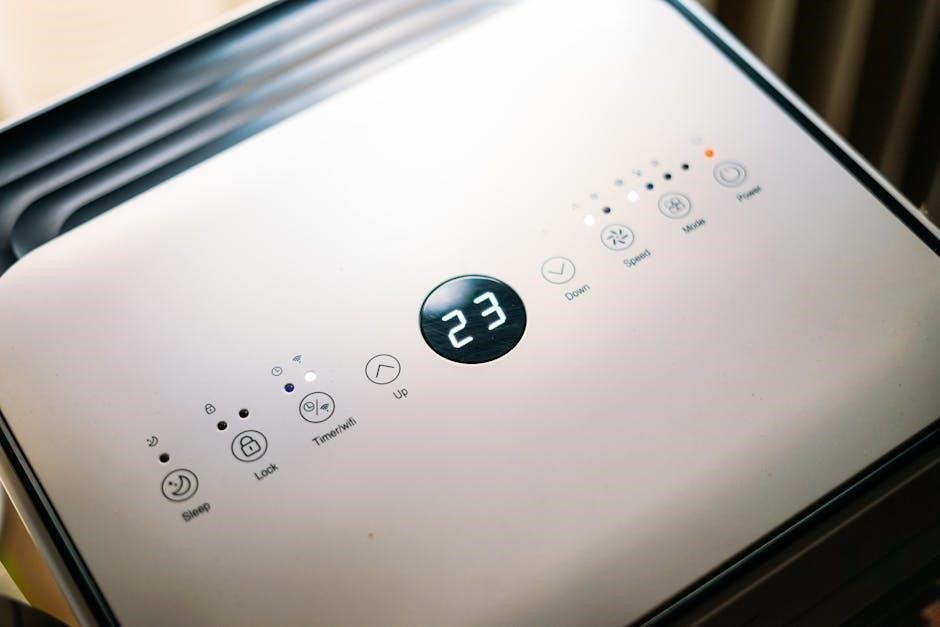
The control panel features intuitive buttons for core functions. The “Power” button toggles the unit on and off. “Mode” allows cycling through cooling, fan, dry, and auto settings. “Temperature” adjusts the desired room temperature, usually displayed digitally. “Fan Speed” controls airflow intensity – options typically include low, medium, and high.
The remote control duplicates these functions, offering convenient operation from across the room. Familiarize yourself with the button layout for effortless control of your Arctic King’s cooling performance.
Cooling Modes: Cool, Fan, Dry, Auto
Arctic King portable ACs offer versatile cooling modes. “Cool” mode actively lowers room temperature, utilizing the compressor and fan. “Fan” mode circulates air without cooling, ideal for ventilation. “Dry” mode functions as a dehumidifier, removing moisture from the air – useful in humid climates.
“Auto” mode intelligently adjusts cooling based on the set temperature and ambient room conditions, optimizing comfort and energy efficiency. Selecting a mode is typically done via the “Mode” button on the control panel or remote. The currently active mode is usually indicated by a corresponding icon on the display.
Experiment with each mode to determine the best setting for your specific needs and preferences, maximizing comfort and control over your indoor environment.
Temperature and Fan Speed Adjustment
Precisely control your comfort! Adjust the desired room temperature using the “Temp Up” and “Temp Down” buttons on the unit or remote control. The display will show the set temperature. Fan speed is adjustable, typically offering Low, Medium, and High settings. Use the “Fan Speed” button to cycle through these options.
Higher fan speeds provide more airflow and faster cooling, but also generate more noise. Lower speeds are quieter and suitable for gentle circulation. Some models feature an “Auto” fan speed, which automatically adjusts based on cooling demand. Remember to allow sufficient time for temperature changes to take effect.
Fine-tuning both temperature and fan speed allows you to create a personalized cooling experience tailored to your preferences and the specific conditions of your room.

Maintenance and Troubleshooting
Ensure peak performance and longevity! Regularly clean filters and address common issues using this guide for a consistently cool and comfortable environment.
Cleaning the Air Filter: Frequency and Procedure
Maintaining a clean air filter is paramount for efficient operation and air quality. Arctic King recommends cleaning the filter every two weeks during heavy use, and monthly with moderate use. Begin by powering off and unplugging the unit. Locate the filter, typically behind the front intake grille. Gently remove the filter, and use a vacuum cleaner with a brush attachment to remove dust and debris.
For a more thorough cleaning, you can wash the filter with mild soap and water, ensuring it’s completely dry before reinstallation. Never operate the AC without a filter, as this can damage the unit and reduce cooling performance. A clogged filter restricts airflow, leading to increased energy consumption and potential overheating. Refer to your model’s specific manual for detailed filter access instructions.
Draining Water: Methods and Precautions
Arctic King portable ACs collect condensation during operation, requiring periodic draining. Most models feature a drain plug or a continuous drain option. To drain, power off and unplug the unit. Locate the drain plug (usually at the rear) and carefully remove it, allowing water to drain into a suitable container. Alternatively, connect a hose to the continuous drain port for automatic drainage into a floor drain.
Caution: Ensure the AC is positioned to prevent water damage. Never tilt the unit excessively while draining. Regularly check the water level to prevent overflow. Some models may display a “full tank” indicator. Always refer to your specific model’s manual for precise draining instructions and safety guidelines to avoid damage or injury.
Common Issues and Solutions (Error Codes)
Encountering problems? Your Arctic King AC might display error codes indicating specific issues. “E1” often signals a full water tank – drain the unit. “E2” may indicate a sensor error; try resetting the unit. “E3” frequently points to a blocked exhaust hose – ensure it’s clear and properly connected. If the unit isn’t cooling, check the air filter for blockage and clean or replace it.
For persistent issues, consult the manual’s troubleshooting section for detailed explanations of error codes and recommended solutions. Never attempt to repair internal components yourself. Contact qualified service personnel for complex repairs. A reset often resolves minor glitches, but always prioritize safety and refer to the official Arctic King documentation.
Safety Information and Warnings
Prioritize your well-being! Always adhere to electrical safety guidelines, ensure proper ventilation, and follow storage precautions for lasting, secure operation.
Electrical Safety Guidelines
Always ensure your Arctic King Portable AC is plugged into a grounded, properly rated electrical outlet. Never operate the unit with a damaged power cord or plug; immediate replacement is crucial. Avoid using extension cords whenever possible, as they can overheat and pose a fire hazard. If an extension cord is absolutely necessary, select one with a sufficient gauge to handle the AC’s power requirements.
Do not expose the AC to rain or moisture, and refrain from operating it in damp environments. Disconnect the unit from the power source before performing any cleaning or maintenance. Never attempt to repair the AC yourself; contact a qualified technician for assistance. Regularly inspect the power cord for any signs of wear or damage. Following these guidelines will significantly reduce the risk of electrical shock or fire, ensuring safe and reliable operation of your Arctic King Portable AC.
Proper Ventilation Requirements
Maintaining adequate ventilation is paramount for efficient and safe operation of your Arctic King Portable AC. The unit requires an exhaust hose to vent hot air outside, typically through a window. Ensure the window kit is securely installed, creating a tight seal to prevent warm air from re-entering the room. Avoid obstructing the airflow around the unit, keeping furniture and curtains clear of the intake and exhaust vents.
Proper ventilation not only maximizes cooling performance but also prevents moisture buildup and potential mold growth. Regularly check the exhaust hose for kinks or blockages. Never operate the AC in a confined space without proper ventilation. Following these guidelines ensures optimal performance, energy efficiency, and a healthy indoor environment while using your Arctic King Portable AC.
Precautions for Long-Term Storage
Preparing your Arctic King Portable AC for extended storage requires careful attention to detail. Before storing, thoroughly clean the air filter and drain any remaining water from the internal tank to prevent mold and odors. Ensure the unit is completely dry before packing it in its original packaging, or a suitable protective cover.
Store the AC in a cool, dry place, away from direct sunlight and extreme temperatures. Protect the exhaust hose from damage and store it neatly alongside the unit. Disconnect the power cord and secure it to prevent accidental connection. Following these precautions will help maintain the AC’s functionality and extend its lifespan, ensuring it’s ready for use when needed next season.

Downloading the Arctic King Portable AC Manual PDF
Access vital resources easily! Find your Arctic King AC’s manual in PDF format through official websites or trusted online databases today.

Official Arctic King Website Resources
Navigating the official Arctic King website is the most reliable method for obtaining your portable AC’s manual in PDF format. Begin by visiting the Arctic King support section, typically found at the bottom of their homepage.
Locate the “Manuals & Downloads” or “Support” area, then utilize the search function, entering your specific model number for precise results.
Alternatively, browse through categorized lists of available manuals. The website often provides manuals for both current and discontinued models.
Ensure you download the PDF corresponding to your exact model to guarantee compatibility and accurate instructions. Arctic King frequently updates its manuals, so downloading directly from the source ensures you have the latest version with the most current safety information and operational guidance.
Third-Party Manual Databases (Reliable Sources)
While the official Arctic King website is preferred, several reputable third-party manual databases can assist if you encounter difficulties. ManualsLib and ManualsOnline are commonly cited resources offering extensive collections of appliance manuals, including Arctic King models.
Exercise caution when using these platforms; always verify the manual’s applicability to your specific model number. Cross-reference information with the Arctic King website whenever possible.
These databases often rely on user submissions, so accuracy isn’t always guaranteed. Look for manuals with high download counts or positive user feedback.
Be wary of sites with excessive advertisements or requests for personal information. Prioritize platforms known for their reliability and commitment to providing accurate documentation.